
Public sector banks, including the country's largest lender State Bank of India (SBI), have come out with a templated approach for restructuring retail and small business loans of up to Rs 25 crore under the Reserve Bank of India's (RBI) Covid restructuring package 2.0. They have also come out with standardised products to make funds available to business entities for improving healthcare infrastructure and to individuals for meeting Covid treatment expenses. Business loans have been divided into three categories.

The flow of deposits from non-resident Indians (NRIs) hit a four-year low in the financial year 2020-21 mainly due to contraction in foreign currency deposits, latest data released by the Reserve Bank of India (RBI) shows. Total NRI deposits during FY21 were $7.3 billion as compared to $8.6 billion in FY20 - the lowest since 2016-17, when such deposits had contracted by $12.3 billion. Indian banks have three kinds of deposit accounts where NRIs or PIOs (persons of Indian origin) can park their funds: non-resident external-rupee account (NRE); non-resident ordinary rupee account (NRO); and foreign currency non-resident bank account (FCNR [B]).

Record liquidity infusion by the central bank in the banking system during the financial year 2020-21 amid sluggish economic activity resulted in banks investing more in safe government papers than in extending loans, data from Reserve Bank of India (RBI) showed. This trend has not been seen in nearly two decades, barring 2016 - the year of demonetisation.

The Indian regulatory framework forced Citi to hibernate -- contrary to the claim that it never sleeps!

These products are extremely transparent and are the lowest charged products in the insurance space. The policyholder has to only pay the fund management charge. Hence, from the cost side, ULIPs are very competitive.

Since 2014, the public sector banks' branch network in rural and semi urban has grown by a mere 4,000 while for private sector banks, it doubled from 9,673 to 18,437.

New-generation private sector banks such as ICICI, HDFC, Axis, Kotak etcetera owe their existence to the recommendations of the first Narasimham Committee.

The bank has decided to embark on a 'Technology Transformation agenda' to provide its customers smoother, faster, and better banking experience.

The unprecedented rise in Covid-19 infections in the country, which many are terming as the second wave, has also resulted in a rise in Covid-related claims for general and health insurance companies as hospitalisations have gone up. The insurers have received more than a million Covid-related claims as of April, 2021. According to the data compiled by General Insurance Council, the reported claims total 1.014 million, amounting to more than Rs 14,800 crore.

The Reserve Bank of India (RBI) on Wednesday proposed to make interoperability mandatory for digital payments firms. It also allowed users to withdraw cash from e-wallets and fintech companies to process RTGS and NEFT transactions. The RBI expressed dissatisfaction over prepaid payment instruments' (PPIs') failure to migrate towards full-KYC (know your customer) PPIs, and therefore interoperability, even two years after guidelines were issued.
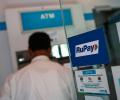
RuPay is working on how to increase offers to customers. It is also focused on technology innovation in the card payment system.

As of March 25, life insurers have paid Rs 1,986 crore towards 25,500 Covid death claims

Lenders can now initiate recovery proceedings since the SC has lifted the standstill on asset classification, which protected stressed accounts from slipping into NPAs.

'We will be looking to prune our portfolio to make GIC Re a healthier entity.'

The race to get a New Umbrella Entity (NUE) licence for digital payments may get crowded. As many as six consortiums are said to be in the fray to apply for an NUE licence, which would create a for-profit National Payments Corporation of India (NPCI)-like body for retail payments. A consortium led by Financial Software and Systems (FSS), a leading provider of payment products and payment processor, is in talks and may file an application to the RBI for an NUE license, said sources aware of the development. The other constituents of this group include Indian Bank, Central Bank of India, India Post Payments Bank, National Bank for Agriculture and Rural Development (Nabard), and a few small finance banks.

The discount should be equal to interest rates on savings bank account deposit of State Bank of India.

The product, named Saral Suraksha Bima, will have a maximum sum assured of Rs 1 crore and minimum Rs 2.5 lakh.
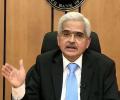
With inflation under control, the Monetary Policy Committee's (MPC's) job is to support growth because the economy had recovered well from the lows in the initial months of the pandemic, according to the panel's members, who met in the first week of this month. The minutes of the meeting show the Reserve Bank of India (RBI) governor in his statement said: "Given the sharp moderation in inflation along with a stable near-term outlook, monetary policy needs to continue with the accommodative stance to ensure that the recovery gains greater traction and becomes broad-based." Ashima Goyal, external member of the MPC, said: "The current macroeconomic configuration and its expected future evolution imply there is space for the MPC to continue to support the revival of the economy with inflation remaining in the target band."
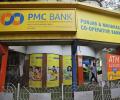
the three investors that have submitted their final bids are not commercial banks. Among the three, one is a non-banking financial company. Another distinctive feature of the revival is that PMC may lose its cooperative bank characteristic after its reconstruction.

While it took UPI three years to reach a billion transactions in a month, the next billion came in just a year. Digital payments, especially UPI, saw increased adoption in 2020 due to the Covid-19 pandemic.
 © 2026 Rediff.com - Advertise with us - Disclaimer - Privacy Policy - Sitemap - Feedback - About us - Terms of use - Grievances